If you need a handful of plastic parts quickly, 3D printing is usually the better choice. If you need thousands of identical parts at a low cost each, injection moulding wins. The deciding factor is the mould: injection moulding requires one, and it is expensive and slow to make, while 3D printing needs no tooling at all. Everything else — materials, finish, accuracy — refines that basic trade-off.
How each process works
3D printing (additive manufacturing)
A printer builds a part one thin layer at a time directly from a digital model. The main plastic methods are:
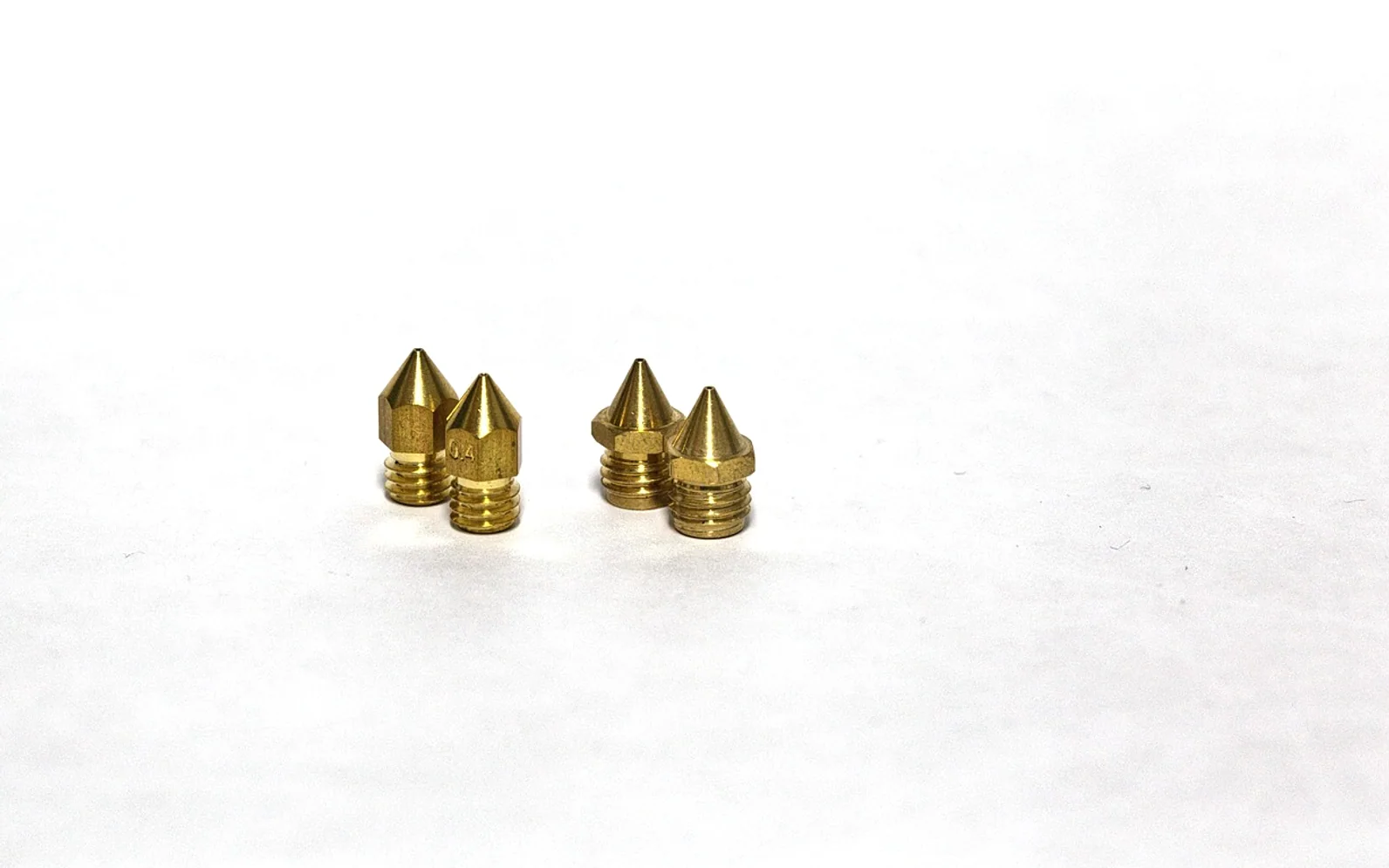
- FDM / FFF: a heated nozzle lays down melted filament. Affordable and common, but layer lines are visible.
- SLA and other resin printing: light cures liquid resin layer by layer, giving fine detail and smooth surfaces.
- SLS and powder-bed fusion: a laser or heat source fuses nylon powder. No support structures are needed, and parts are strong enough for many functional uses.
Injection moulding
Plastic pellets are melted and forced under high pressure into a steel or aluminium mould, cooled and ejected — a cycle that typically takes seconds to a minute or so. Our full explainer on how injection moulding works covers the machine and mould in detail.
Head-to-head comparison
| Factor | 3D printing | Injection moulding |
|---|---|---|
| Upfront tooling | None | A mould must be designed and machined |
| Cost per part | Roughly constant whatever the quantity | Falls sharply as quantity rises |
| Time to first part | Hours to days | Weeks, mainly for mould making |
| Speed at volume | Slow; each part takes as long as the first | Very fast cycle times |
| Design changes | Edit the file and print again | Modifying a mould is costly |
| Geometry | Internal channels, lattices, organic shapes | Needs draft angles, even walls, no trapped undercuts without extra mould actions |
| Materials | Growing range, but narrower | Thousands of grades, fillers and colours |
| Surface and consistency | Layer lines and some directional weakness | Smooth, repeatable, uniform strength |
Understanding the cost crossover
With 3D printing, part number one and part number five hundred cost about the same, because the machine time and material per part do not change. With injection moulding, the mould is a large fixed cost spread over every part made; once that is paid off, each extra part costs very little. Somewhere between these two curves is a crossover quantity. Where it falls depends on part size, complexity, material and the type of mould, so there is no single figure — the sensible approach is to request quotes for both routes at your expected volume.
When 3D printing makes more sense
- Prototypes to test fit, form and function before committing to a mould.
- Small batches, spare parts for older equipment and custom one-offs.
- Jigs, fixtures and gauges for the factory floor.
- Complex shapes that cannot be moulded, such as internal cooling channels or lightweight lattices.
- Products that change often or are personalised to each customer.
When injection moulding makes more sense
- Stable designs produced in high volumes.
- Parts needing a specific material grade, colour or certification.
- Tight tolerances repeated across every part.
- Cosmetic surfaces, textures or transparent parts.
Using both together
The two processes are often steps in one project rather than rivals:
- Prototype with 3D printing and iterate quickly.
- Bridge production with printed or soft aluminium tooling, or short-run printed moulds, to get early units to market.
- Scale up with hardened steel moulds once the design is frozen.
- Support production with printed fixtures, gripper fingers and replacement parts.
Material matters
Most injection-moulded parts are thermoplastics such as polypropylene, ABS, polycarbonate and nylon. 3D printing uses related materials — PLA, PETG, ABS and nylon filaments or powders — as well as photopolymer resins. Resins cure into a cross-linked network, so they behave more like thermosets; our guide to thermoplastics versus thermosets explains why that affects heat resistance and recycling.
What about CNC machining and other processes?
CNC machining cuts parts from solid blocks. Like 3D printing it needs no mould, but it offers a wider choice of engineering plastics and metals and very good accuracy, at the cost of more waste and limits on internal shapes. Hollow containers are a different case altogether: they are usually made by blow moulding rather than either method compared here.
Common mistakes
- Designing for printing, then moulding unchanged. A printable shape may have uneven walls or undercuts that a mould cannot release.
- Judging the final product by an FDM prototype. Strength, finish and flexibility will differ from a moulded part.
- Ordering a mould too early. Late design changes are much cheaper before steel is cut.
- Printing large production runs long after the volume would justify a mould.
Quick answers
Is 3D printing cheaper than injection moulding?
For low quantities, usually yes, because there is no mould to pay for. For large runs, injection moulding is almost always cheaper per part.
Are 3D-printed parts as strong?
Powder-bed and some resin parts can be quite strong, but layered parts are often weaker between layers than a moulded part made from a comparable material.
Tell us what you think.
Corrections are always welcome.