The number stamped inside a small triangle on plastic packaging is a resin identification code. It tells you what type of plastic the item is made from — nothing more. It does not promise that the item is recyclable, and it does not mean your local collection will accept it. Knowing the codes, though, makes it much easier to understand why some plastics are welcome in recycling bins and others are not.
Why the triangle can be misleading
The codes were introduced so that recycling facilities could sort materials more easily. Because the number sits inside chasing arrows, many shoppers read it as a recycling symbol. Newer versions of the standard replace the arrows with a plain solid triangle precisely to reduce that confusion, but both styles are still common on shelves.
The seven codes at a glance
| Code | Resin | Typical items | Recycling picture |
|---|---|---|---|
| 1 | PET or PETE (polyethylene terephthalate) | Drinks bottles, food trays, some fibres | Widely collected |
| 2 | HDPE (high-density polyethylene) | Milk jugs, detergent and shampoo bottles, crates | Widely collected |
| 3 | PVC or V (polyvinyl chloride) | Pipes, window frames, some blister packs | Rarely accepted in household bins |
| 4 | LDPE (low-density polyethylene) | Bags, films, squeeze bottles | Films often need separate drop-off points |
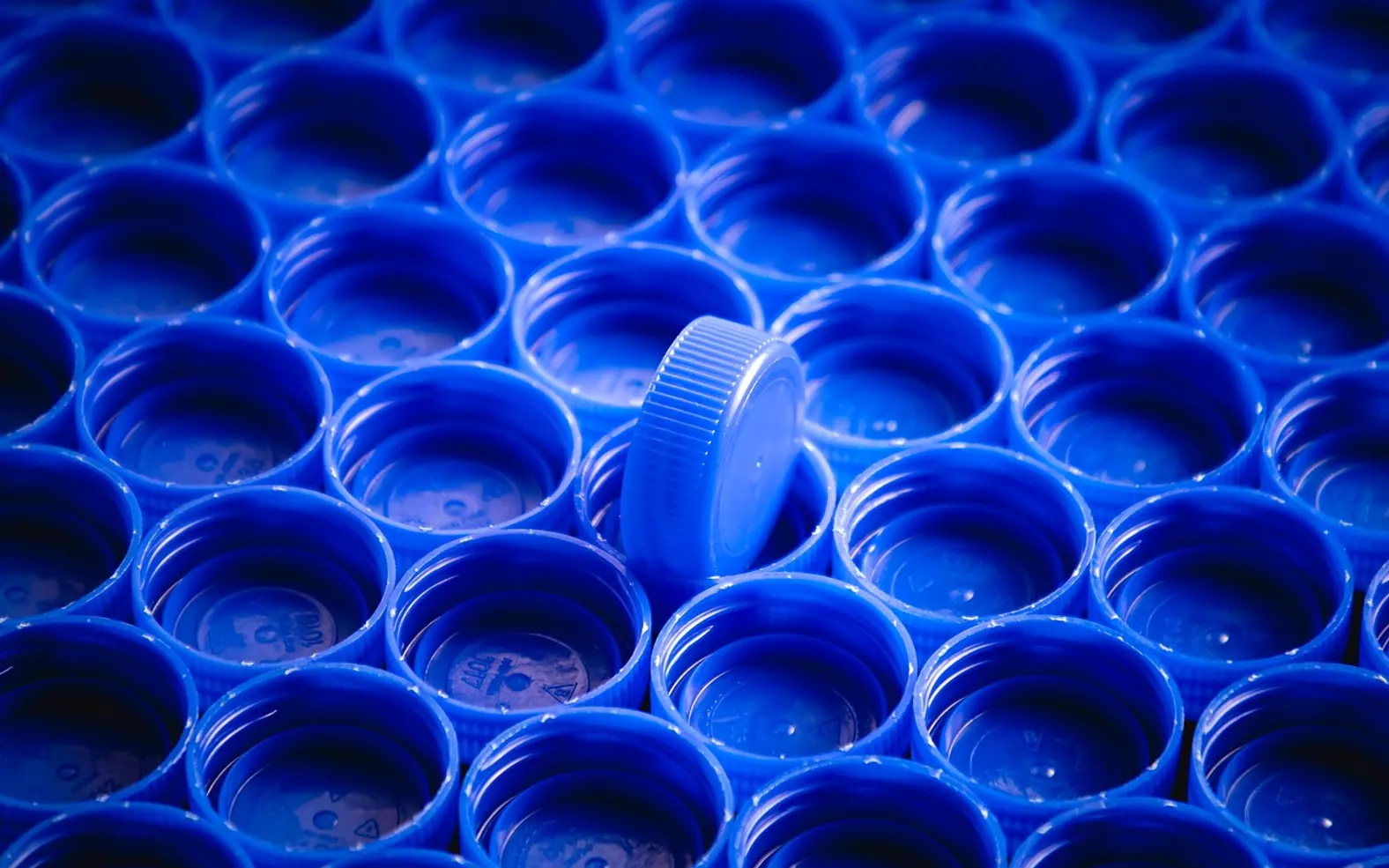
| 5 | PP (polypropylene) | Yoghurt pots, food tubs, bottle caps | Increasingly accepted, varies by area |
| 6 | PS (polystyrene) | Foam trays, cups, disposable cutlery | Difficult; often not collected |
| 7 | Other | Polycarbonate, ABS, nylon, multi-layer packs, some bioplastics | Usually not recycled through household collection |
A closer look at each type of plastic
1 – PET
Clear, light and strong, PET is the material of most single-use drinks bottles. Clean PET bottles are among the most sought-after recycled plastics, often turned into new bottles, food trays or polyester fibre.
2 – HDPE
Stiff and resistant to many chemicals, HDPE is used for opaque bottles and containers. Many of these are made by blow moulding, and recycled HDPE commonly becomes pipes, crates and garden products.
3 – PVC
Valued in construction because it is durable and weather-resistant, PVC contains chlorine and various additives, which makes it awkward to mix with other plastics in recycling streams.
4 – LDPE
Soft and flexible, LDPE films jam the rotating screens in many sorting plants. That is why plastic bags and wraps are often collected separately, for example at supermarket drop-off points.
5 – PP
Polypropylene handles heat well, which makes it common in microwaveable tubs and car parts. Collection has expanded in many places, but it still depends on local facilities.
6 – PS
Polystyrene, especially expanded foam, is bulky and very light, so it is expensive to transport for the small amount of material recovered.
7 – Other
Code 7 is a catch-all. It covers tough engineering plastics, layered packaging that combines several materials, and plant-based plastics such as PLA. Our guide to bioplastics explains why "plant-based" does not automatically mean recyclable or compostable at home.
Why some codes recycle better than others
Codes 1 to 6 are all thermoplastics, meaning they can in principle be melted and reshaped. Whether they actually get recycled depends on practical factors:
- Volume: materials collected in large, consistent quantities are easier to process economically.
- Sorting: rigid bottles are simple to separate; films, small items and dark plastics are harder for sorting machines to detect.
- Contamination: food residue, labels and mixed materials lower the value of a batch.
- Demand: recycling only works if manufacturers want to buy the recovered material.
Recycled vs virgin plastic
Virgin plastic is made directly from fresh feedstock, usually derived from oil or natural gas, and has never been used before. Recycled plastic comes from material that has already been made into products. It is usually labelled either post-consumer (from household and commercial waste) or post-industrial (offcuts and rejects from factories).
| Virgin plastic | Recycled plastic | |
|---|---|---|
| Consistency | Very uniform properties | More variation between batches |
| Colour | Clear or easy to colour precisely | Often greyish or tinted; limits bright colours |
| Food contact | Straightforward to approve | Needs approved cleaning processes and controls |
| Resource use | Requires new raw material | Reuses existing material |
Mechanical recycling shortens polymer chains slightly each time, so recycled material is often blended with virgin resin or used in less demanding products. Chemical recycling methods, which break plastics down to simpler building blocks, aim to get around that limit but are less widespread.
Practical tips for sorting at home
- Check your local council or waste provider's list; it overrides any symbol on the pack.
- Empty and lightly rinse containers so residue does not spoil a batch.
- Keep bottle caps on or off according to local guidance — practices differ.
- Do not put bags and films in household bins unless your area says so.
- When unsure, leave it out; one wrong item can contaminate a whole load.
For larger clear-outs and renovation waste, separating materials before collection helps too — see how a container service supports recycling on bigger projects.
Tell us what you think.
Corrections are always welcome.