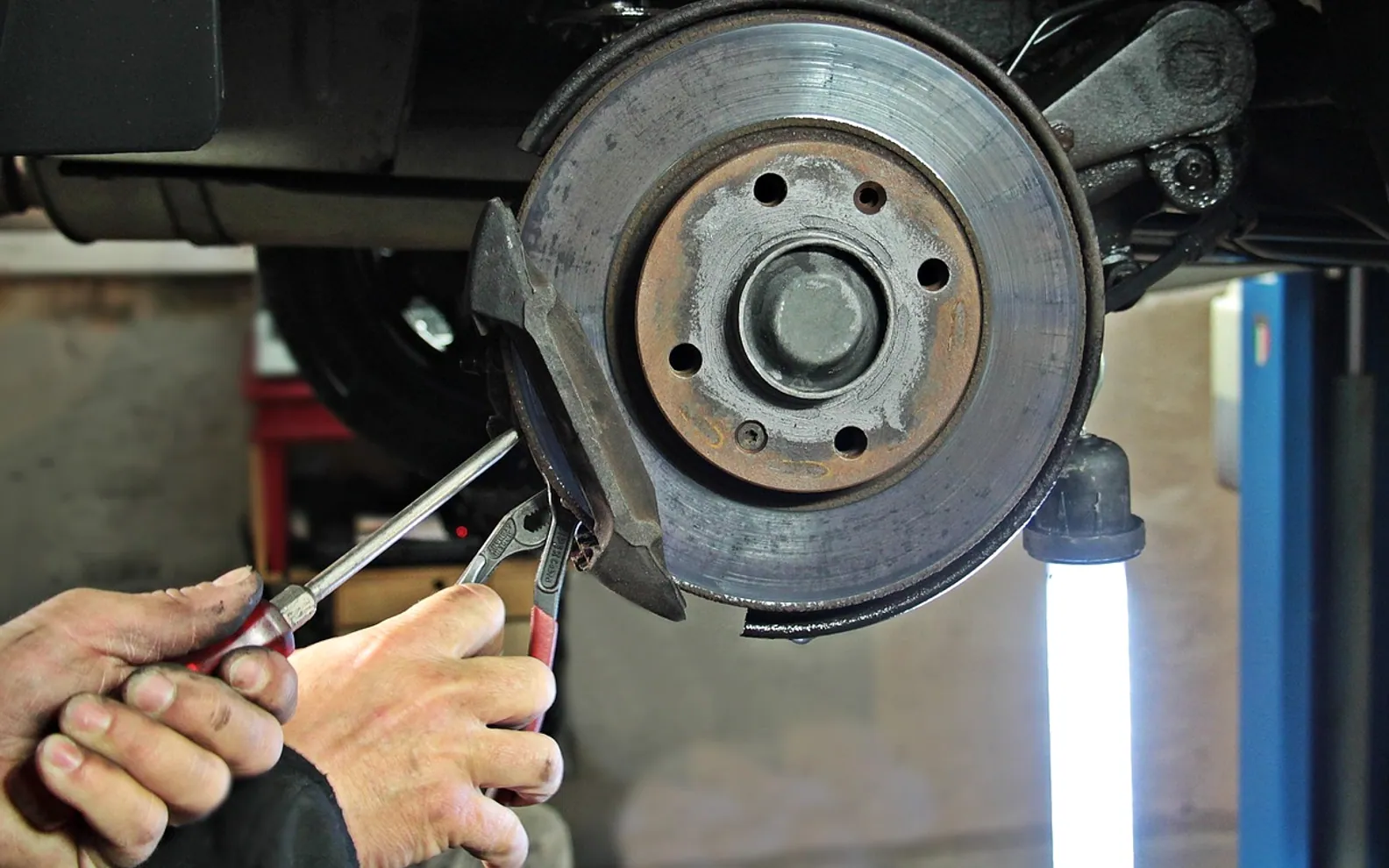
Most drivers press the brake pedal hundreds of times a week without a second thought. That trust is earned only if the system behind the pedal, pads, discs, callipers, hoses and fluid, is in good condition. When something in that chain wears or fails, stopping distances grow and the margin for error shrinks.
Signs that deserve attention
Brakes rarely fail without warning. Common signals include:
- A high-pitched squeal or a grinding noise when braking.
- A pedal that feels soft, spongy or sinks further than usual.
- Vibration through the pedal or steering wheel when slowing down.
- The car pulling to one side under braking.
- A brake warning light on the dashboard.
- Fluid spots near the wheels or a burning smell after normal driving.
Any of these is a reason to have the car inspected promptly rather than waiting for the next scheduled service.
What a professional inspection covers
A thorough check goes beyond glancing at pad thickness. Technicians typically measure pad and disc wear, look for scoring or warping on the rotors, inspect callipers for sticking pistons, check hoses and lines for cracks or leaks, and test the condition and level of the brake fluid, which absorbs moisture over time. Many problems, such as a slow leak or a failing master cylinder, are hard to spot without the right equipment and experience.
Driving conditions influence how quickly parts wear. Frequent stop-and-go city traffic, hilly routes, towing and carrying heavy loads all place extra demands on the system, while mostly motorway driving tends to be gentler. A technician can take these habits into account when advising how often the brakes should be checked on a particular car.
Precision matters
Brake work leaves little room for improvisation. Components must be compatible with the vehicle, fasteners tightened to the correct specification and air bled from the system properly. A small mistake can affect how evenly the car stops. A professional brakes and rotors service follows the manufacturer's procedures and tests the result before the car goes back on the road.
Modern systems need modern know-how
Today's cars combine traditional hydraulics with electronics: anti-lock braking, stability control, electronic parking brakes and, in many vehicles, automatic emergency braking. Replacing pads on a car with an electronic parking brake may require diagnostic tools to retract the callipers safely. Hybrid and electric vehicles use regenerative braking, which changes how and when the friction brakes wear. Workshops that keep their equipment and training current can handle these systems correctly.
A small investment in safety
Regular brake checks, in line with the vehicle handbook and adjusted for driving style and conditions, help catch wear before it becomes dangerous or expensive. Replacing pads in time can also protect discs from damage. For something that stands between a driver and a collision, relying on qualified technicians is simply the sensible choice.
Tell us what you think.
Corrections are always welcome.