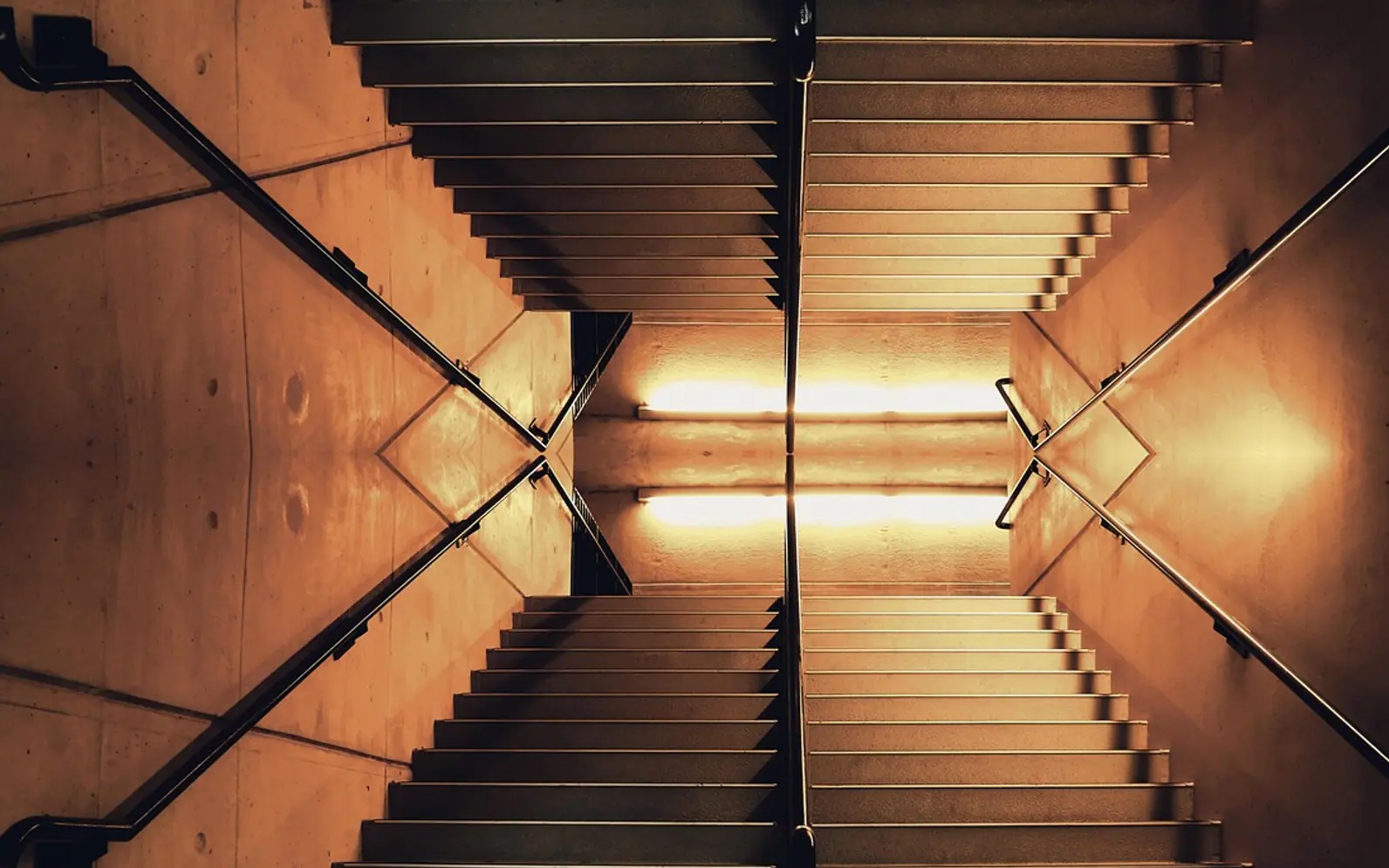
Stairs are one of the few places in a home where poor visibility can turn an ordinary trip to the kitchen at night into a stumble. They are also a strong architectural feature that ceiling lights often flatten. Small lights placed along the steps solve both problems at once.
Why step lighting works
Overhead fixtures light a staircase from above, which tends to cast shadows across the treads and makes edges hard to judge. Low-level lights illuminate each step directly, defining where the surface begins and ends. The soft, grazing light also brings out the texture of wood, stone or concrete, turning a functional route into something closer to a design statement.
Choosing the right fittings
Placement
Lights can be set into the wall beside each step, recessed into the riser, or mounted under the nosing so light washes down onto the tread. Each creates a different effect, from a row of glowing points to a continuous band of light.
Style and finish
Square, round and slim rectangular faceplates suit different interiors. Brushed metal suits modern homes, while darker finishes blend into traditional settings or outdoor walls.
Colour temperature and brightness
Warm white usually feels most comfortable in living spaces, while cooler tones can suit contemporary designs. Low brightness is often enough on stairs and avoids glare in the eyes of people walking down.
Indoor or outdoor rating
Garden steps and deck stairs need fittings rated for moisture and weather. Ranges of outdoor Step lights designed for decks and terraces are a good place to compare sizes and finishes.
Installation options
| Option | Suits | Points to consider |
|---|---|---|
| Mains-wired recessed lights | New builds and renovations | Requires cabling into walls or risers; use a qualified electrician |
| Low-voltage systems | Outdoor steps and decks | Need a transformer; often easier and safer to run outside |
| Battery or rechargeable units | Rented homes and quick upgrades | No wiring, but batteries need attention |
| Solar fittings | Sunny garden steps | Output depends on daylight and season |
Any work involving mains electricity should be carried out by a qualified electrician in line with local regulations.
Practical benefits
- Safer movement at night for children, older relatives and guests.
- Less need to switch on bright overhead lights late in the evening.
- Low energy use with LED fittings.
- Better visibility of steps leading to entrances and terraces.
- Motion sensors or timers can switch lights on only when needed.
Bringing it together
Step lights work best as part of a wider lighting plan. Coordinate them with hallway, landing and garden lighting so the colour temperature matches and the transition between spaces feels natural. A thoughtful layout can make a staircase both safer and one of the most attractive features of the home after dark.
Tell us what you think.
Corrections are always welcome.